Product display
A presentation pedestal for Additive Center's 3D printed work
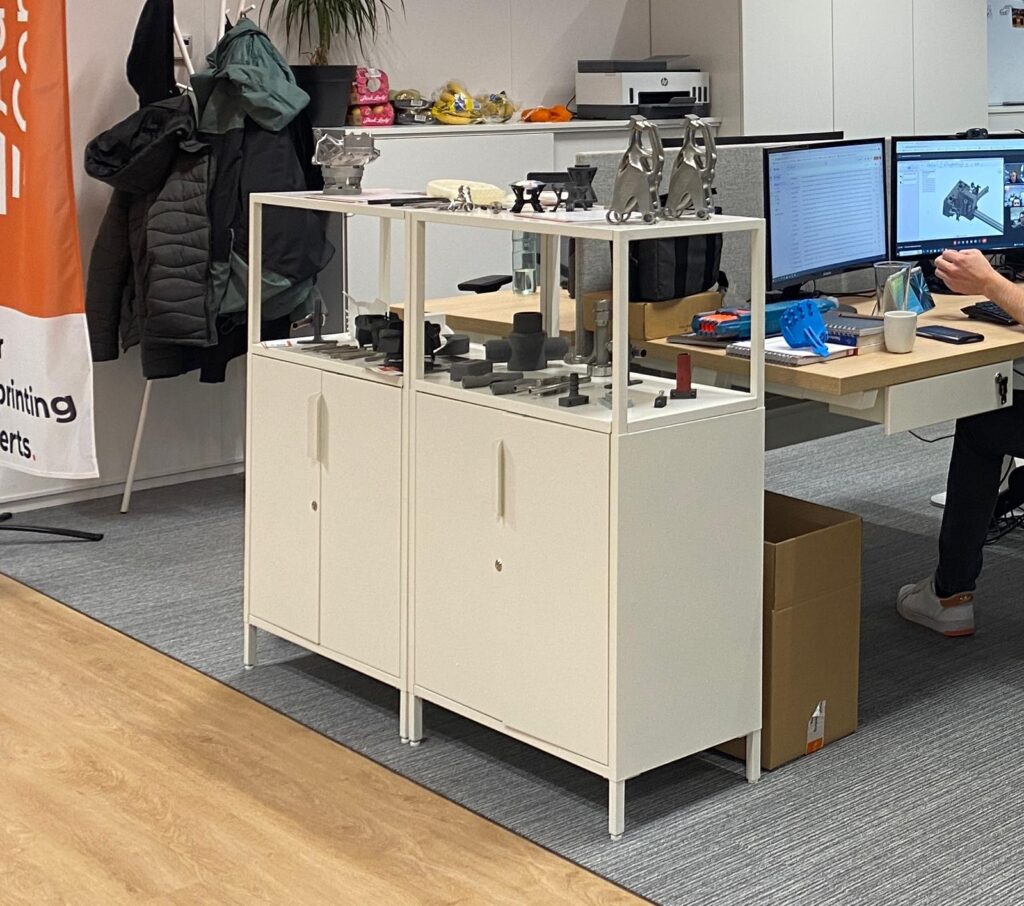
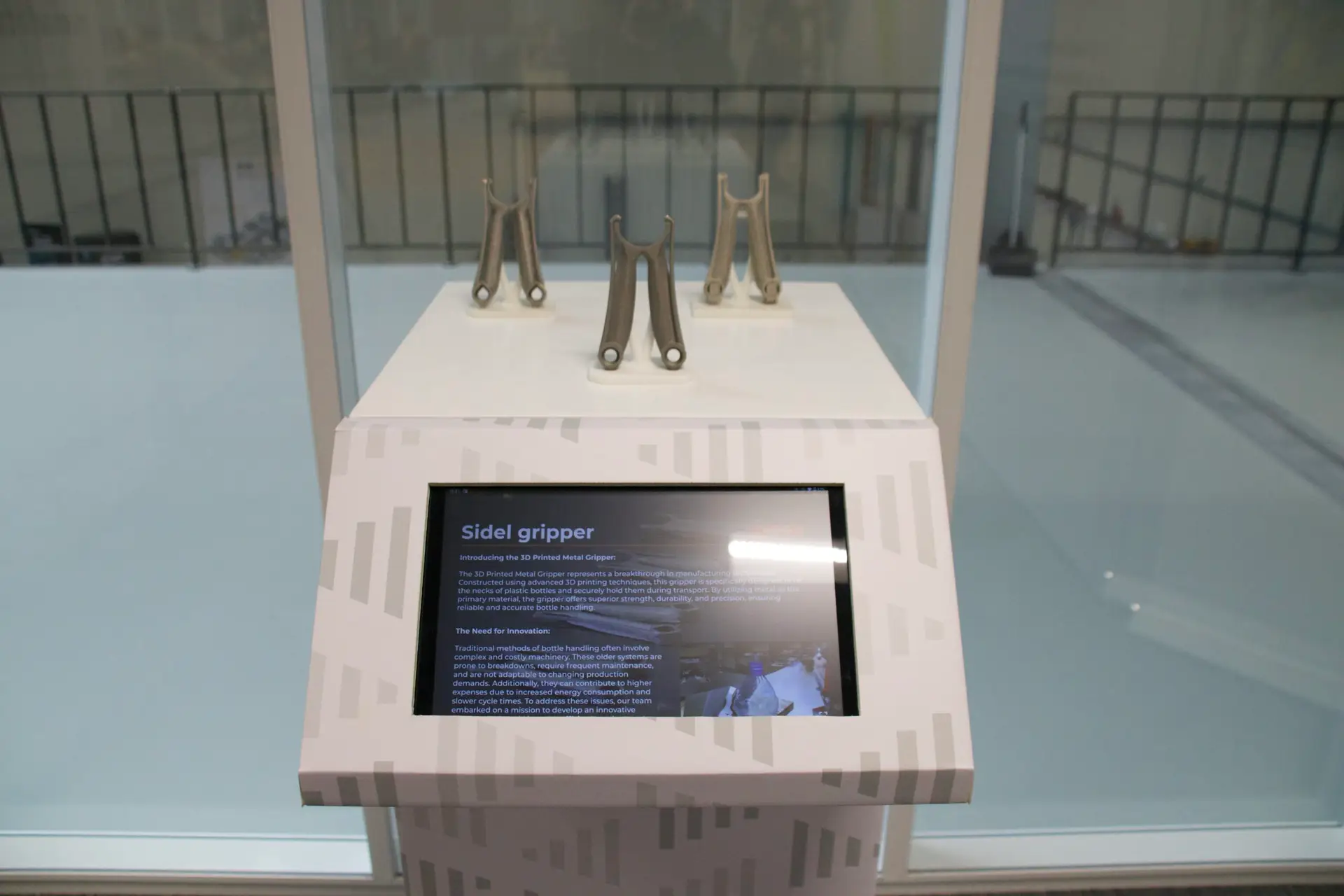
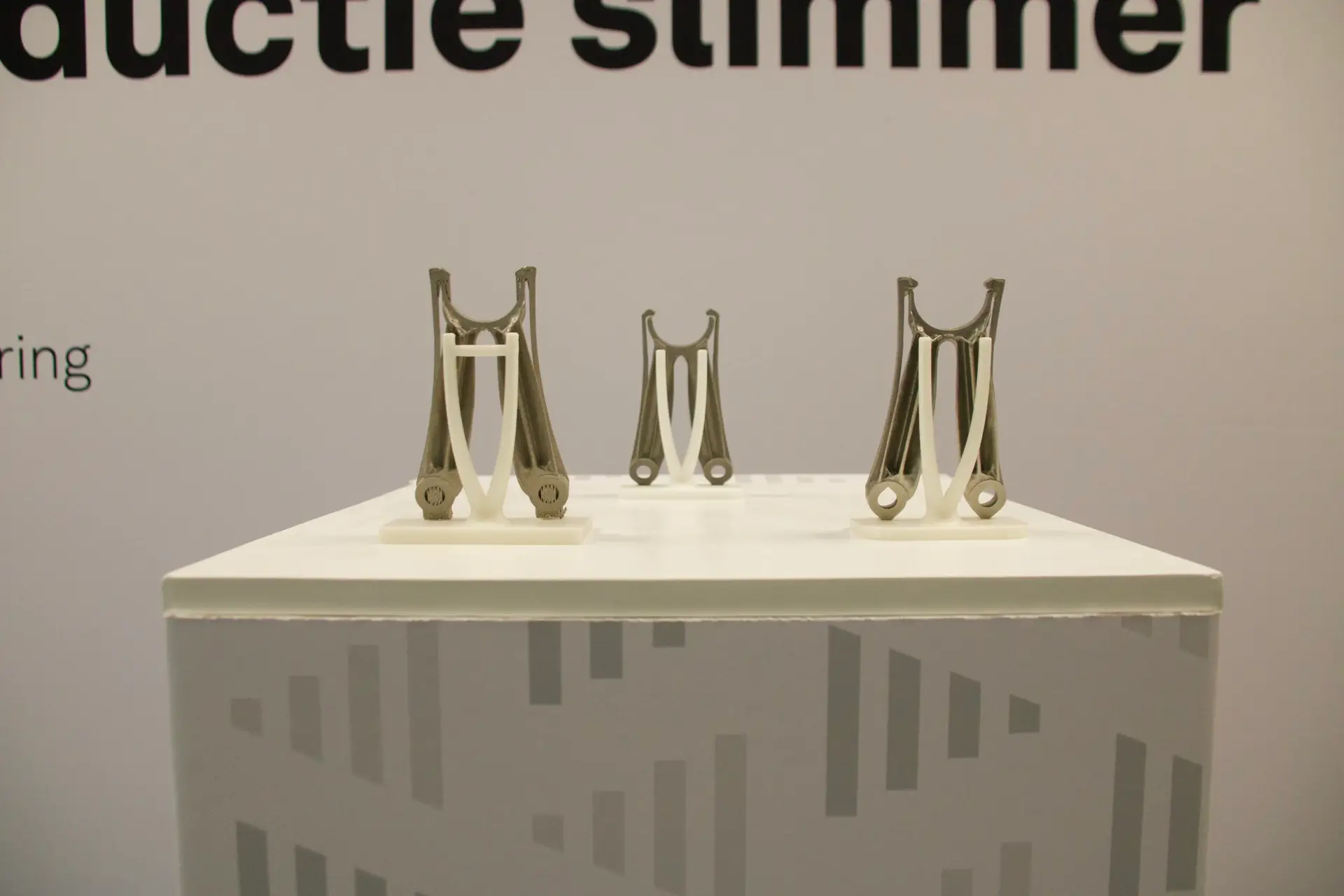
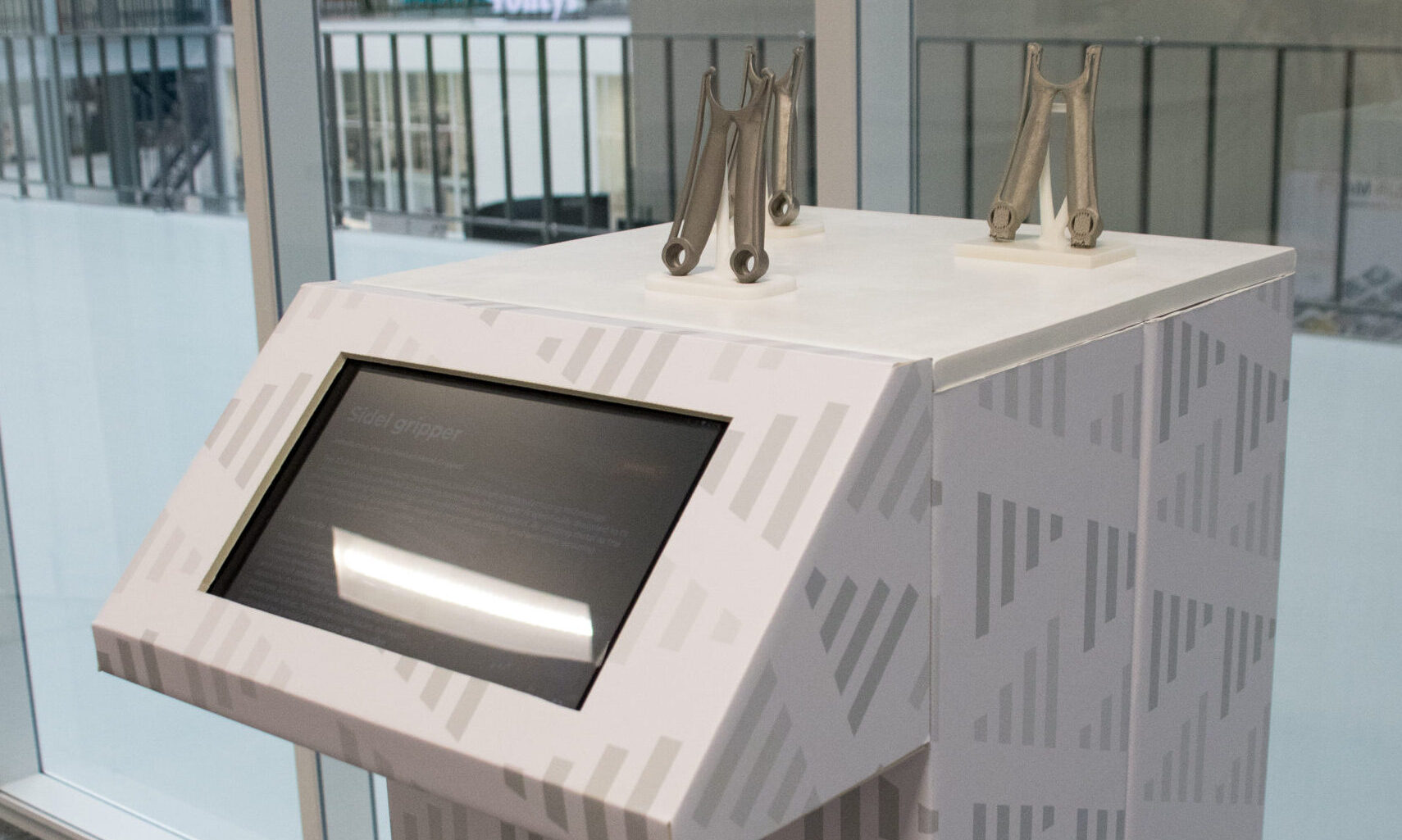
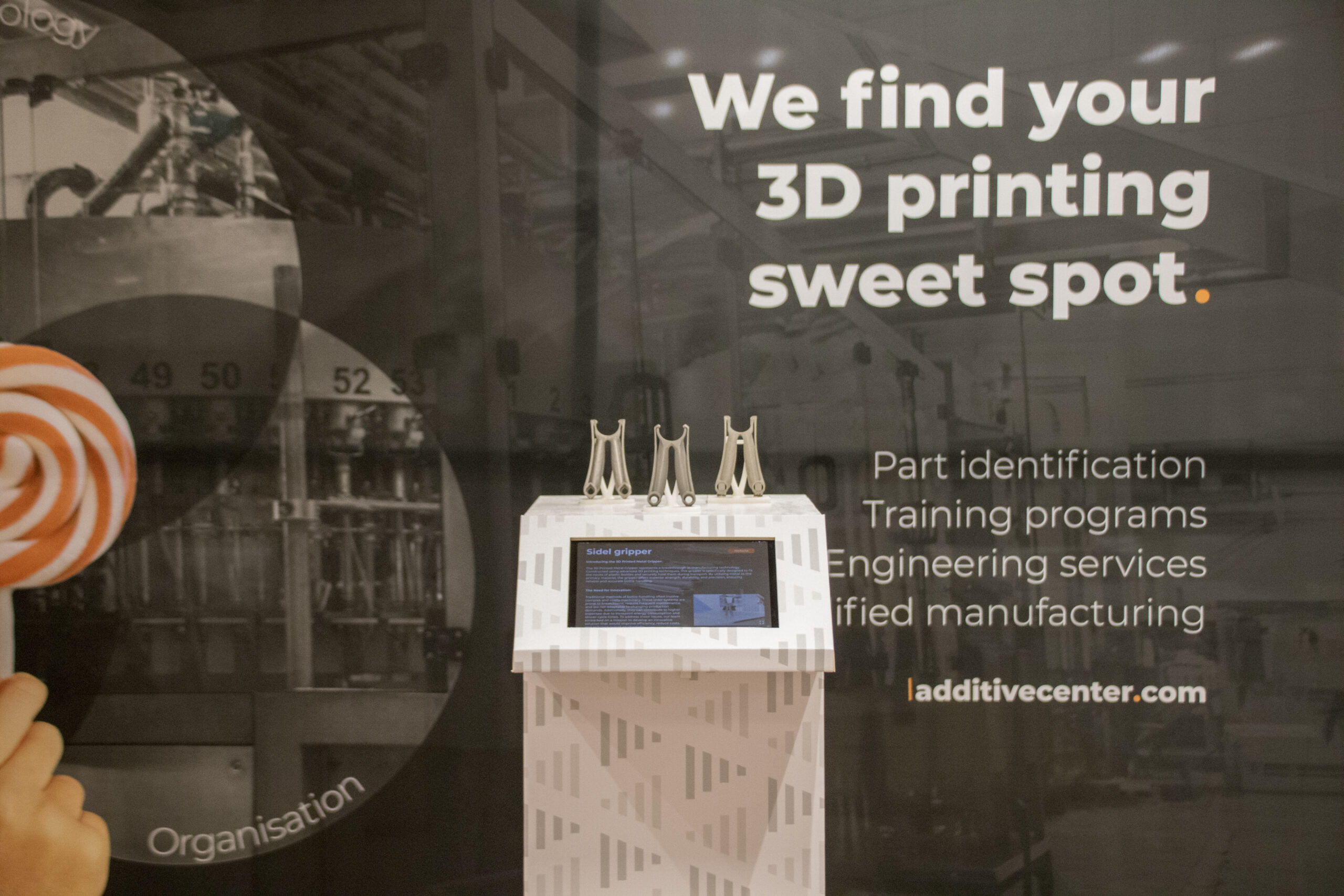
Display Stand is a presentation pedestal designed for Additive Center to showcase their 3D printed industrial objects to potential clients. On the pedestal there is a 3D printed object shown on a custom 3D-printed stand that orients the object into its most representative pose. So the stand does the work of showing off what the object can actually do.
- 20 weeks, 2023
- Product design, prototyping & supplier sourcing
- Laser cutting, 3D printing, Adobe XD
The challenge
How do you present a 3D printed industrial part so a potential client immediately sees why it's worth investing in?
Additive Center needed several display stands for their office that shared a single design language without being identical, since every part has its own shape and ideal viewing angle. The visitors needed to read an object’s quality at a glance, with its description built into the stand itself rather than bolted on as an afterthought.
Research & understanding
Audience
Technical company employees, aged 30 to 60 and highly educated, decide fast on whether a printed part demonstrates real potential
Orientation
Every printed object needs its own viewing angle, so one universal stand could never present all of them well
Branding
The description and finish had to carry Additive Center’s visual identity, so the stands read as one cohesive family, not loose parts
These findings shaped that there must be one shared pedestal language, with a second, object-specific part that does the actual presenting.
Exploration & process
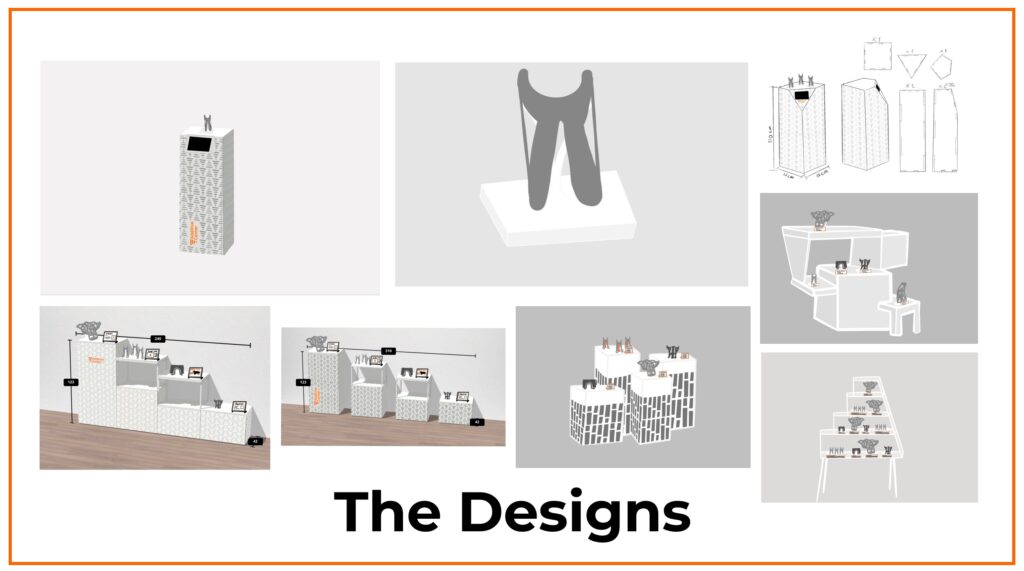
Concept sketching
Several directions were explored, including a tiered, ladder-like display table, before settling with the client on a family of tall pedestals at different heights, all sharing one branded panel pattern.
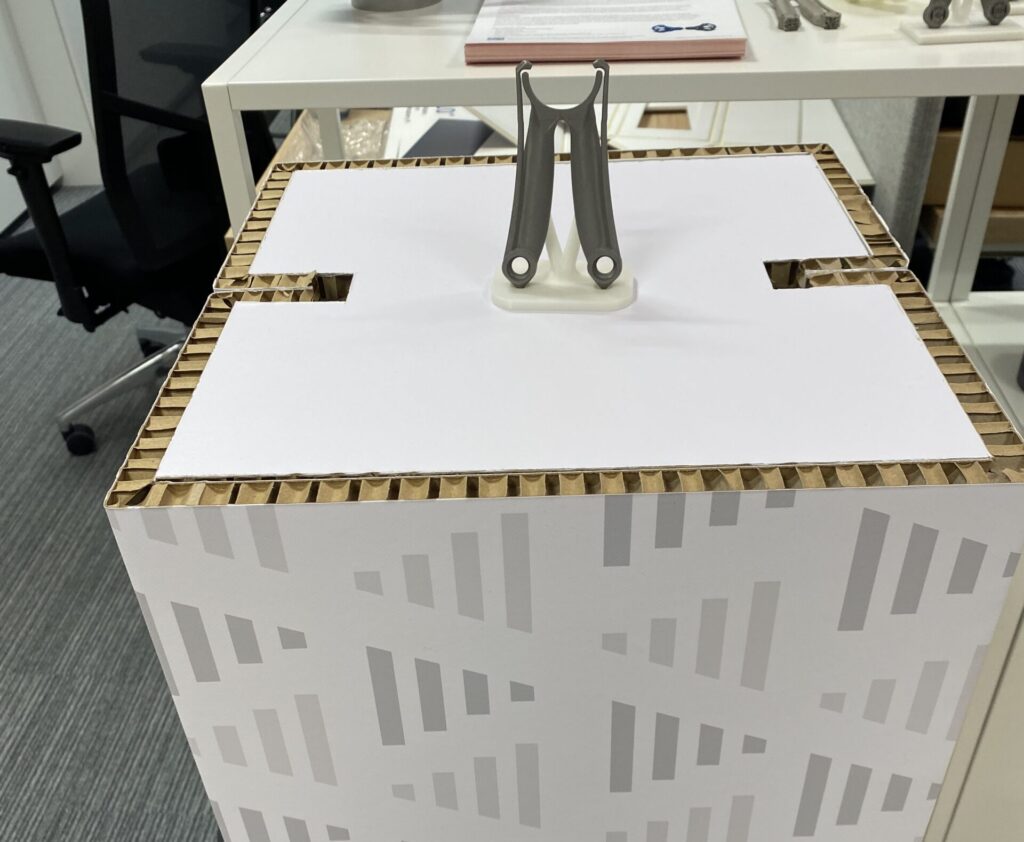
Building one of the stands
Panels were laser-cut from thick cardboard with newly made Additive Center pattern printed directly onto the material, so no bare cardboard edge shows from the sides, then assembled with tab joints and wooden top and bottom caps.
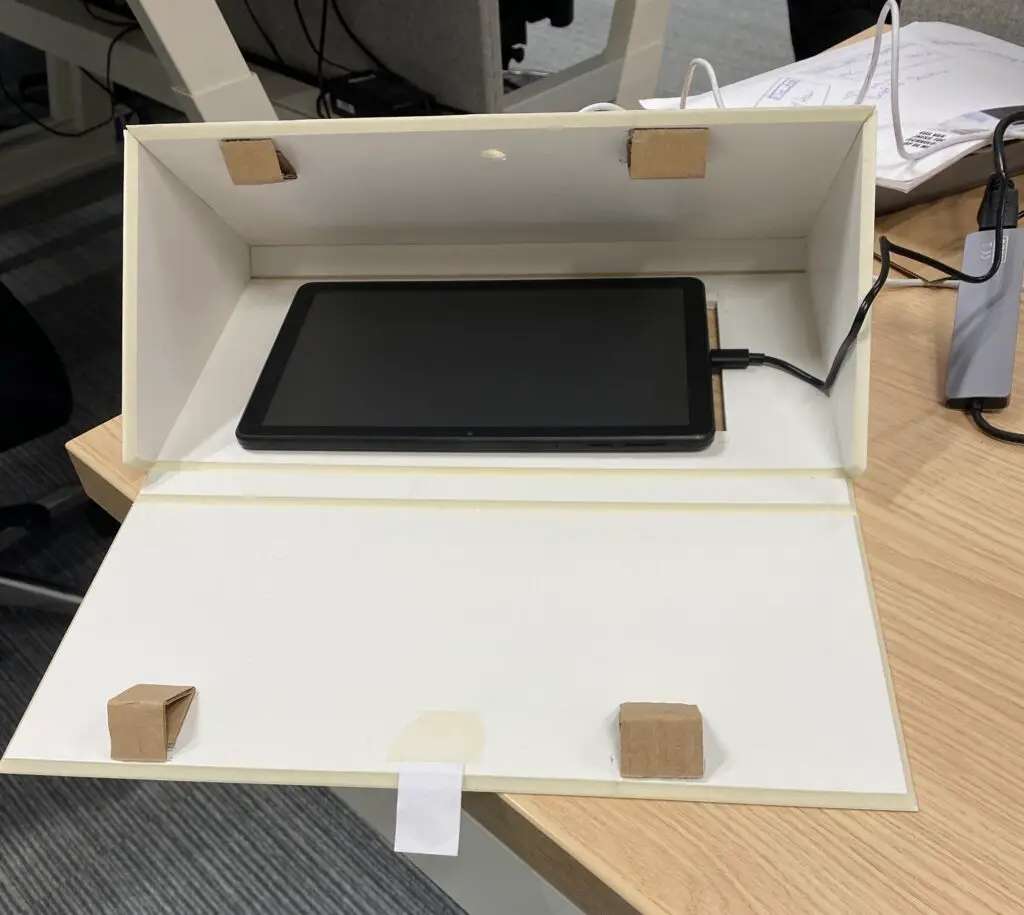
Small stand & screen prototype
The object-orienting stand went through several test prints before the final version, while a Raspberry Pi driving a 10.1 inch touchscreen, wrapped in foamboard with the same pattern, proved the description-and-video screen concept.
Final design
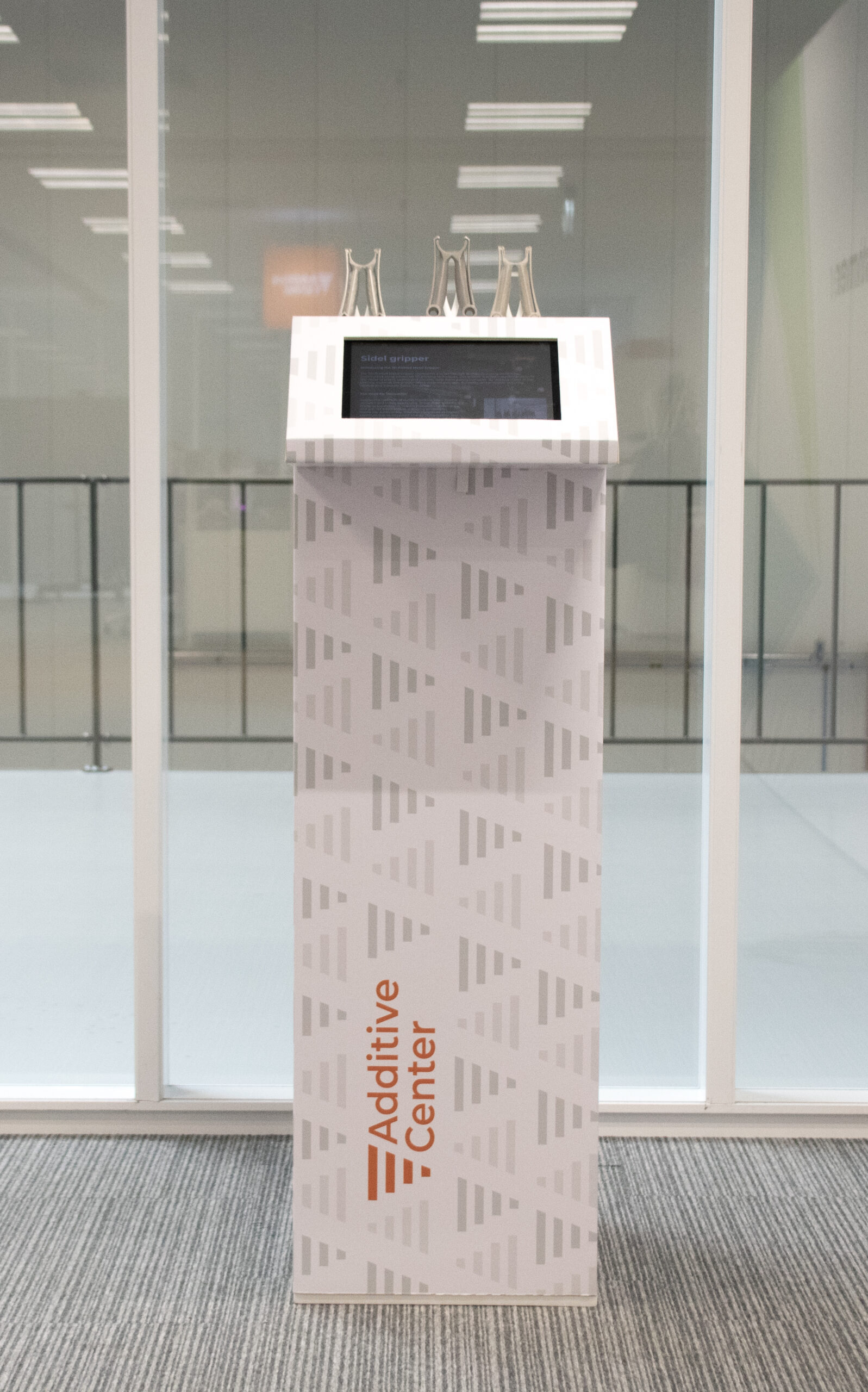
The final built stand stands 110cm tall on a 35 by 35cm cardboard base wrapped in the new branded pattern, topped by a tilted panel holding the screen and a swappable 3D-printed orientation piece. One stand was produced, tested and finished as the real deliverable, with the format kept simple enough that Additive Center can laser-cut further stands for other objects without changing the design.



Key design decisions
A two-part display system
A shared lifting pedestal is paired with a second, object-specific 3D-printed stand that orients each part into its most representative pose, so every object gets shown correctly without needing its own custom pedestal.
A printed, edge-hidden pattern
The created logo pattern is printed directly onto the cardboard sheet before laser cutting and assembly, so no raw cardboard edge shows from the sides, keeping the branding consistent and the finish clean.
A portable, modest footprint
Each stand measures 35 by 35 by 110cm, sized to fit the office’s actual floor space and light enough for one person to move. The stand can also be disassembled into 3 pieces and transported or stored easily.
A proof of concept, not a finished app
The Raspberry Pi and touchscreen prototype showed the interactive description and video concept was feasible, while the full interface design was deliberately left for a later phase, given the project’s time.
Reflection
What's next
The interactive screen only got as far as a proof of concept, so the actual application design (what the description and videos look like on screen) is still open. The next step would be designing that interface properly, then producing the remaining stands and orientation pieces now that the shared format has been validated in a real office.
What I learned
Sourcing real suppliers and getting an actual price for laser-cut and printed material made this a different kind of project than a purely conceptual one. I learned that bringing a design from screen to production means discussing what is technically possible with suppliers and finding ways to achieve the finish I envisioned, such as hiding the edges of the cardboard.