The Wheel of Dark Patterns
A wheel game that teaches Gen Z to spot dark patterns
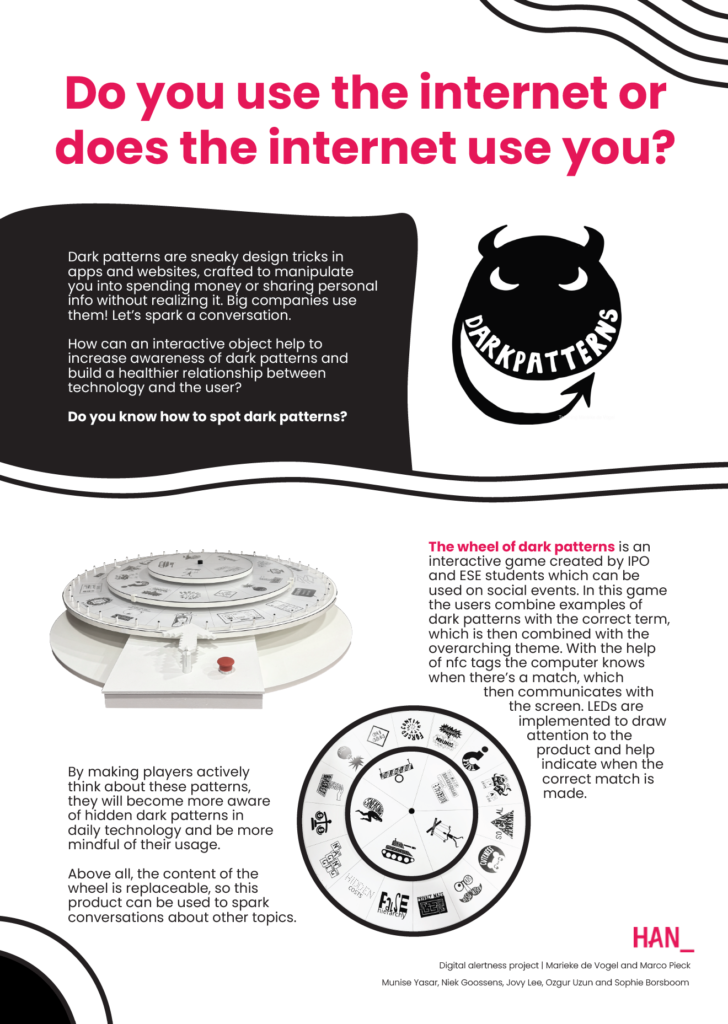
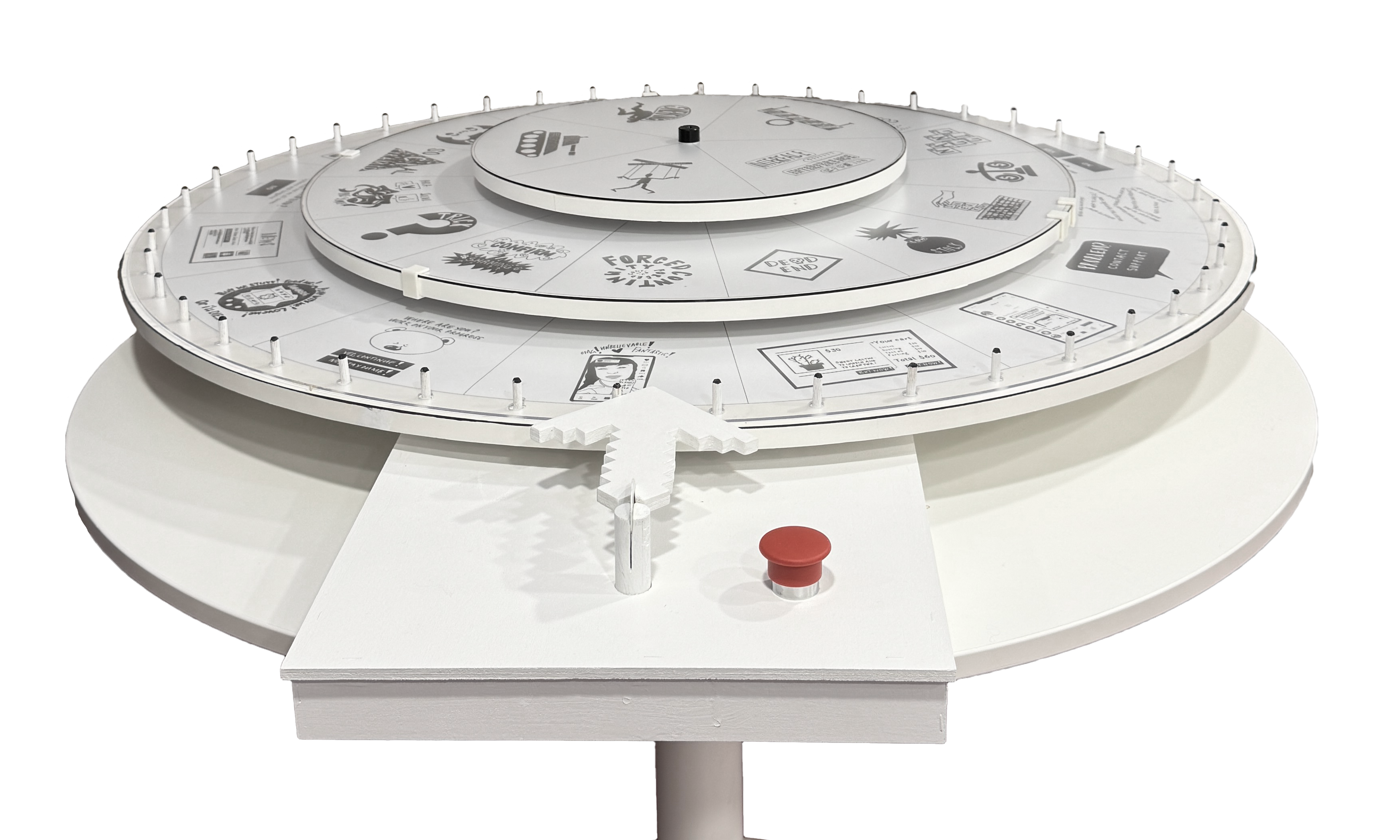
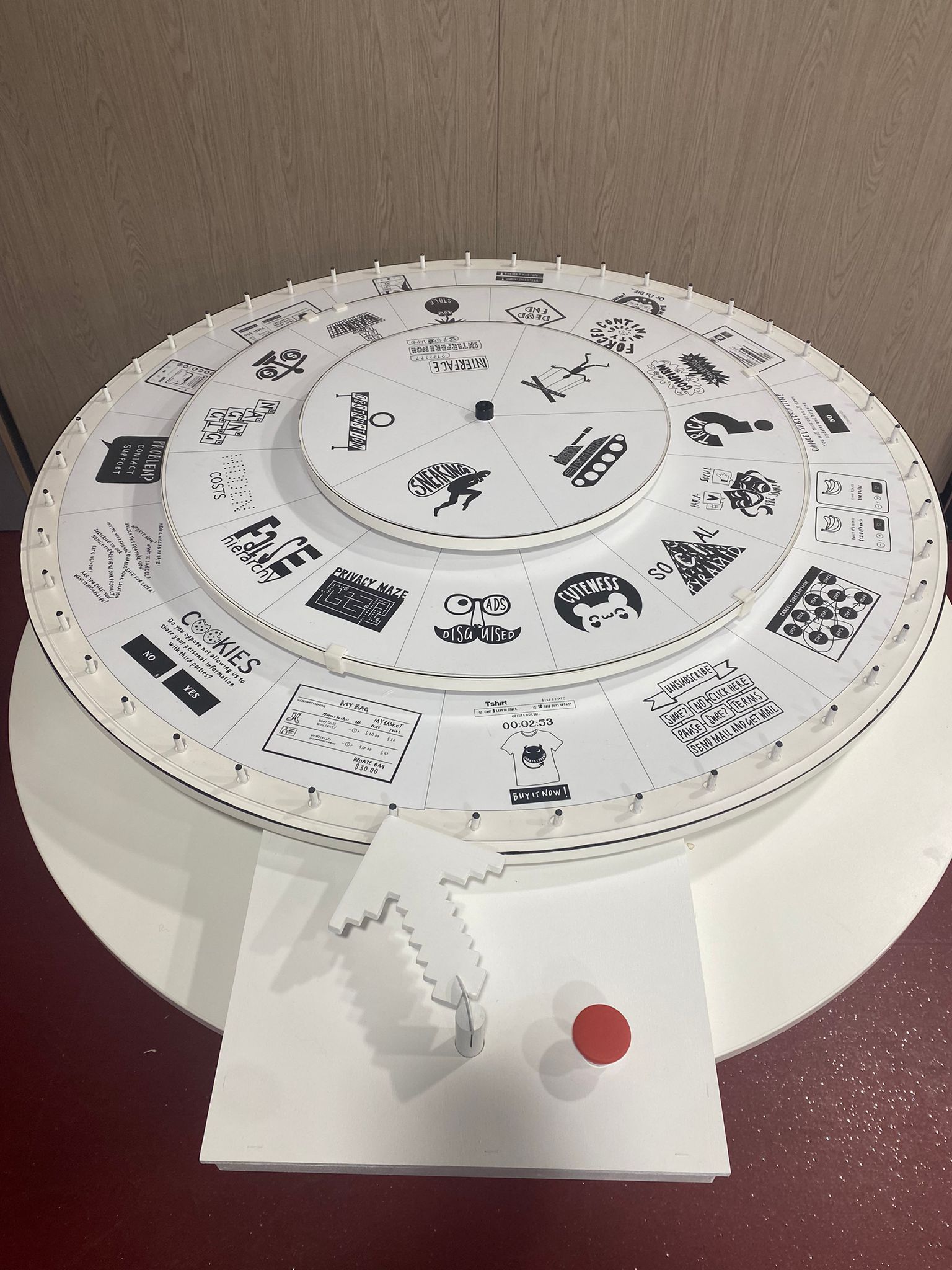
The Wheel of Dark Patterns is an interactive game made to be played at social events. Players match an example of a dark pattern (the sneaky design tricks in apps and websites that manipulate you into spending money or sharing personal information without realising it) to its correct term, then to the overarching theme it belongs to. NFC tags register a correct match and trigger the screen, while LEDs draw attention to the wheel and confirm when a match lands.
- 20 weeks, 2025
- Concept development, prototyping & user testing
- SolidWorks, CNC, Lasercutting, 3D printing
The challenge
How do you make Gen Z actually stop and think about the dark patterns they scroll past every day?
This project started from scratch, with only one goal in mind: make an interactive object that could spark conversations about the digital world and its possible dangers. Early ideas ranged from a deepfake mirror to a rigged wheel game, but anything that felt preachy or too serious risked being ignored by exactly the audience it needed to reach. After leading a brainstorm session with the team, the direction became clear: catch attention in seconds, the way dark patterns do, then turn that attention into a few honest minutes of actually thinking about something real.
Research & understanding
Dark patterns
These manipulative designs exploit cognitive biases and are often disguised as harmless, ordinary interface choices
Target group
Gen Z is used to roughly 8-second attention spans, but will go deep on anything that genuinely hooks them
Attracting attention
the same influence principles behind dark patterns (social proof, liking, unity) can be used ethically to grab attention first
By making players actively think about dark patterns, they become more aware of dark patterns in daily technology and more mindful of how they use it.
Exploration & process
Brainstorming
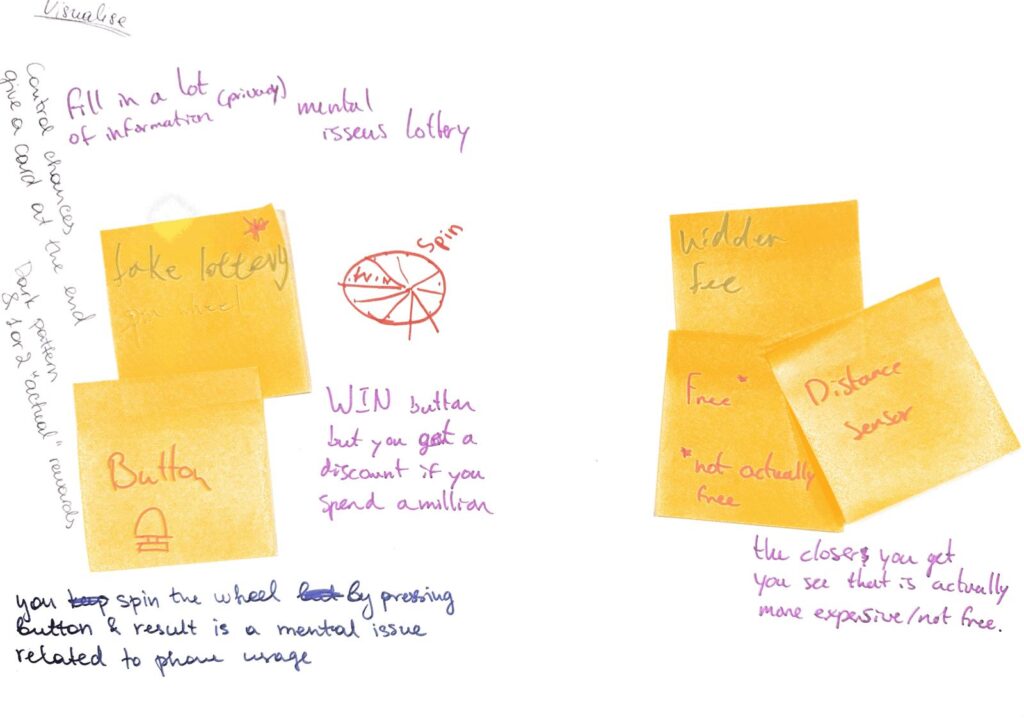
After leading a brainstorm session, keywords on dark patterns, digital usage and technology were grouped into three standout concepts. A deepfake mirror was dropped for being too complex and costly, while a rigged wheel game evolved further once the team realised the “rigged” trick undercut the whole message.
Content design
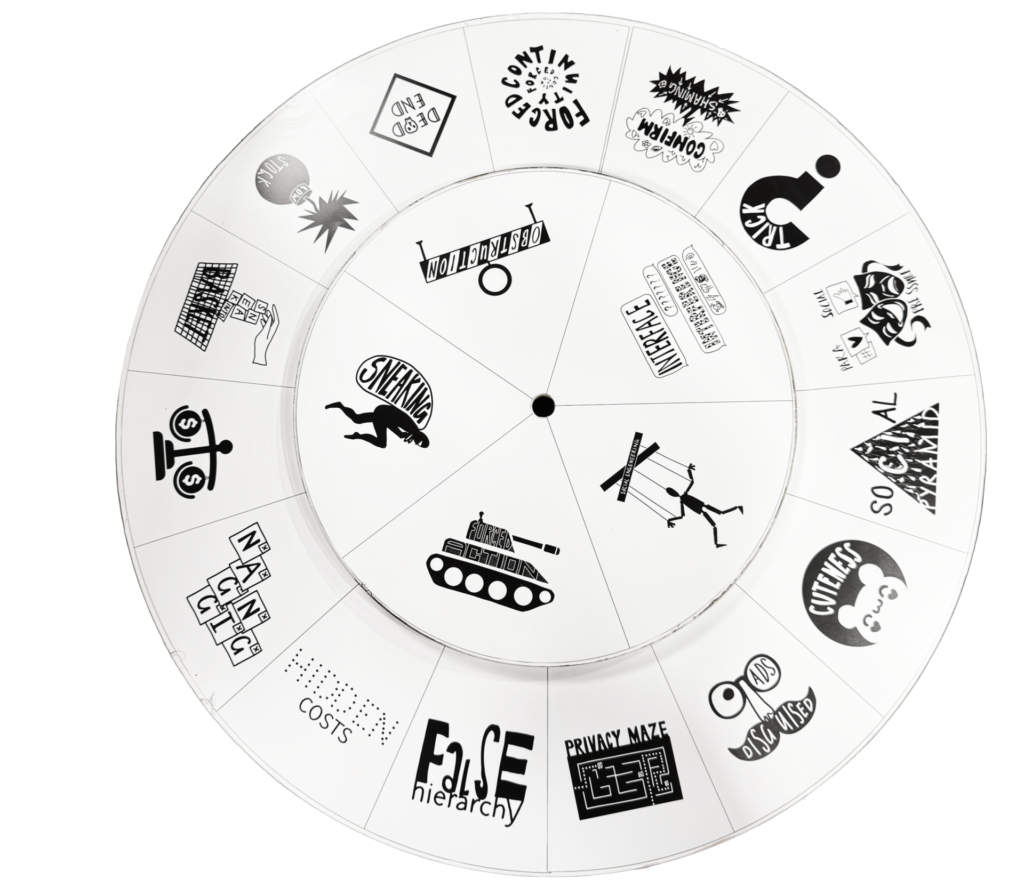
Working with the project owners in Miro, a three-ring matching game took shape: overarching themes on the inner ring, dark patterns on the middle ring, illustrated examples on the outer ring, each independently swappable and printed on paper.
Staged prototyping
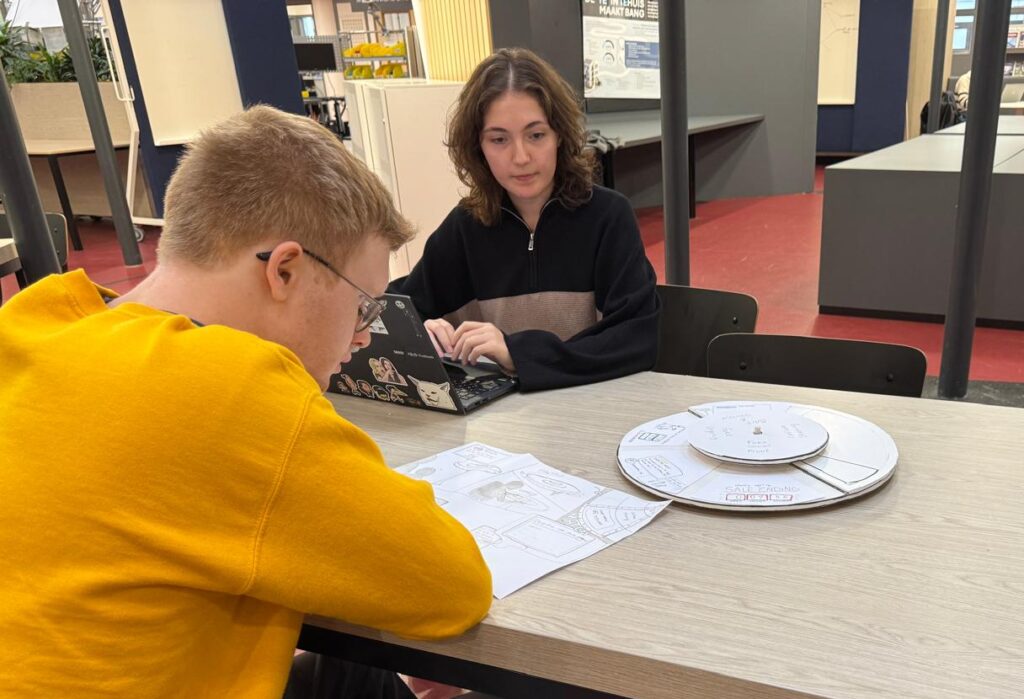
A paper and foam version tested sizing first, then a small wooden version ran early user tests and settled how content would be swapped, before the final rings were CNC-cut from multiplex wood and plexiglass.
Final design
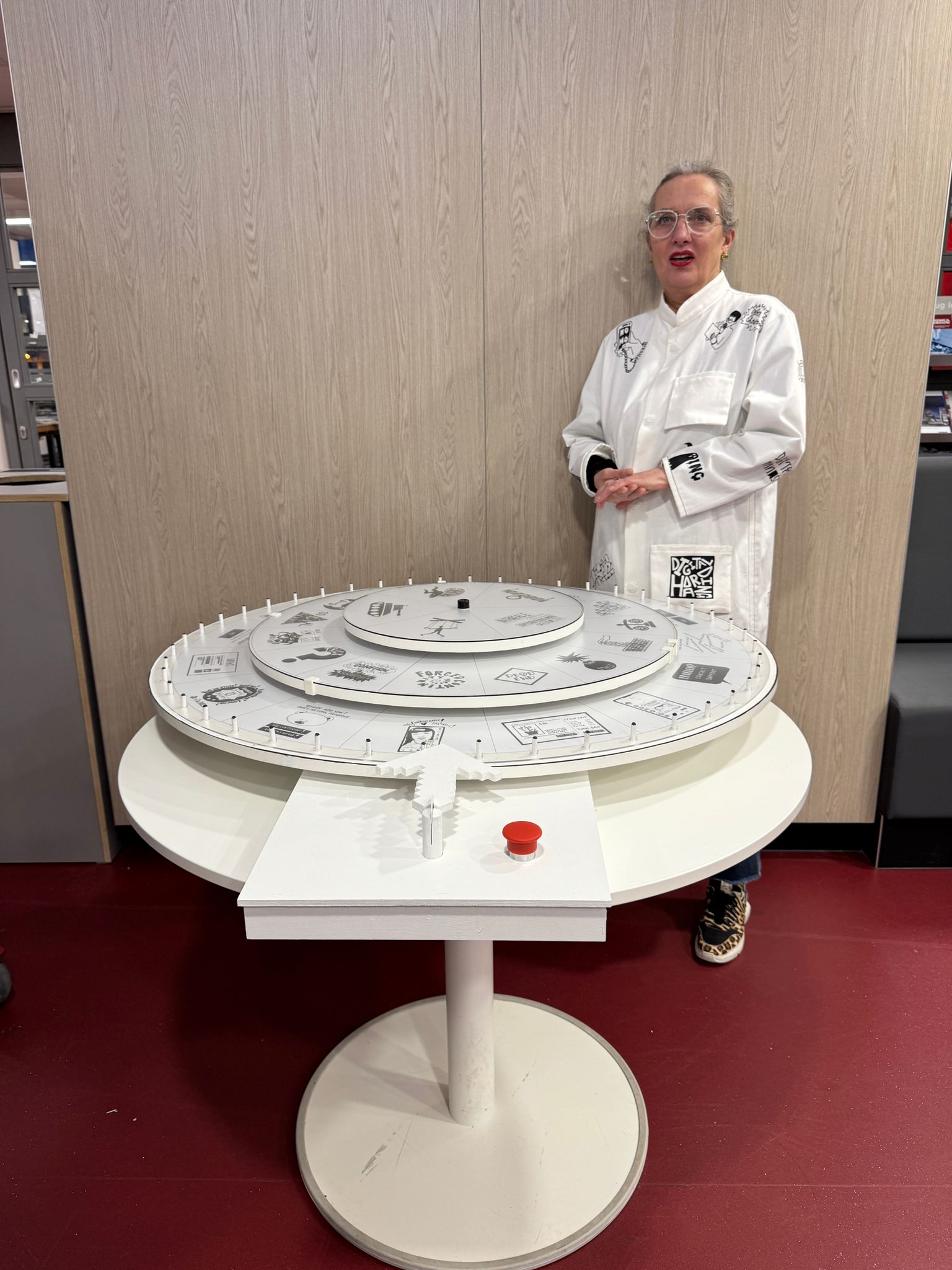
The final prototype is a free-standing, roughly one-metre wheel topped with a hand-shaped pointer and a push button, rewarding a correct match with a card linked to a QR code. Small and mid-fidelity testing shaped the sizing and swap mechanism ahead of the CNC-cut final build, ready to stand up to a full day of public use.

Key design decisions
Turn the wheel
The wheel grabs Gen Z’s attention by inviting them to turn it and see what happens. The game then keeps the interaction fun by giving them a reason to keep spinning the wheel, while encouraging them to think more critically about the dark patterns they encounter.
Swappable content
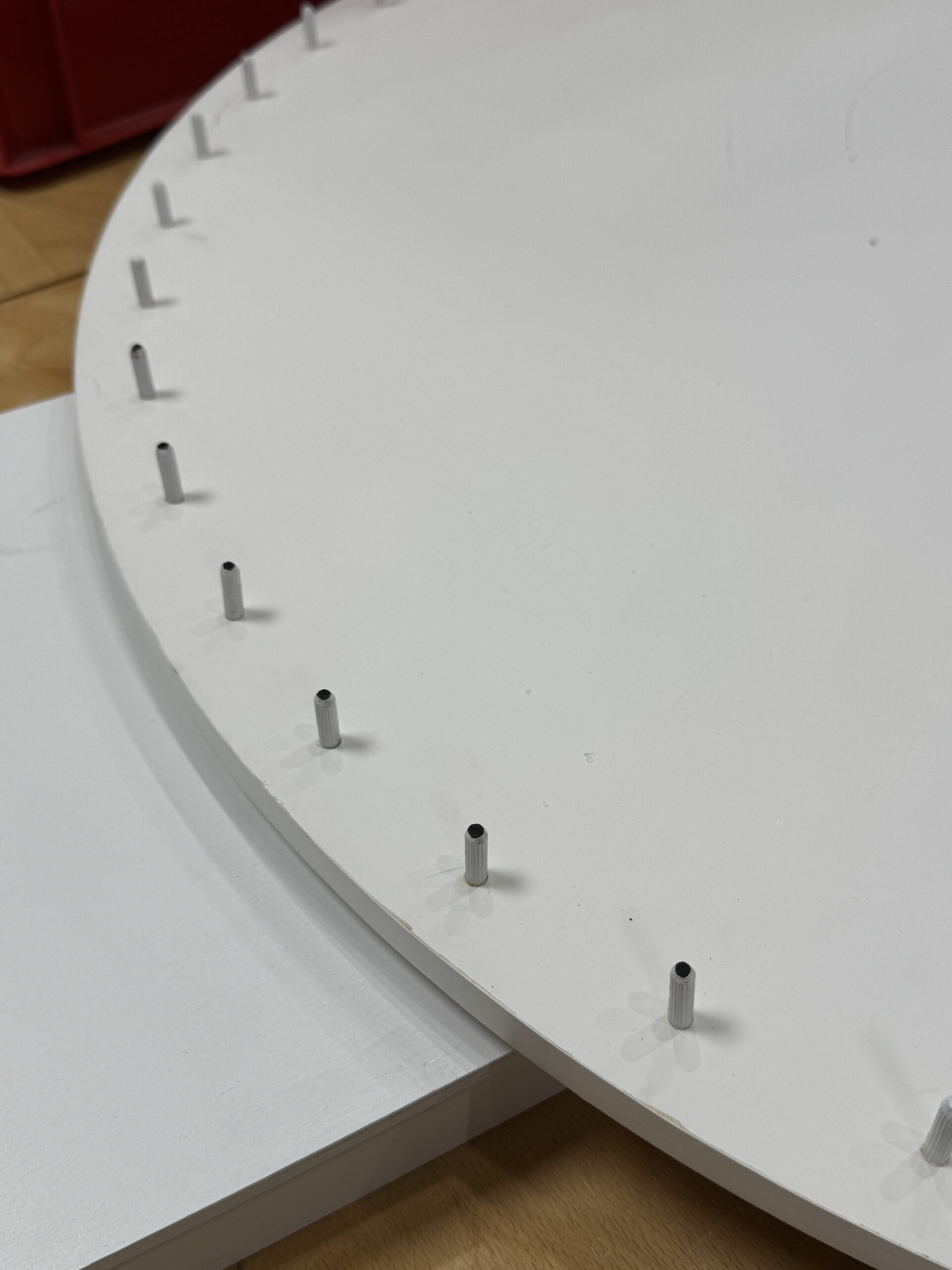
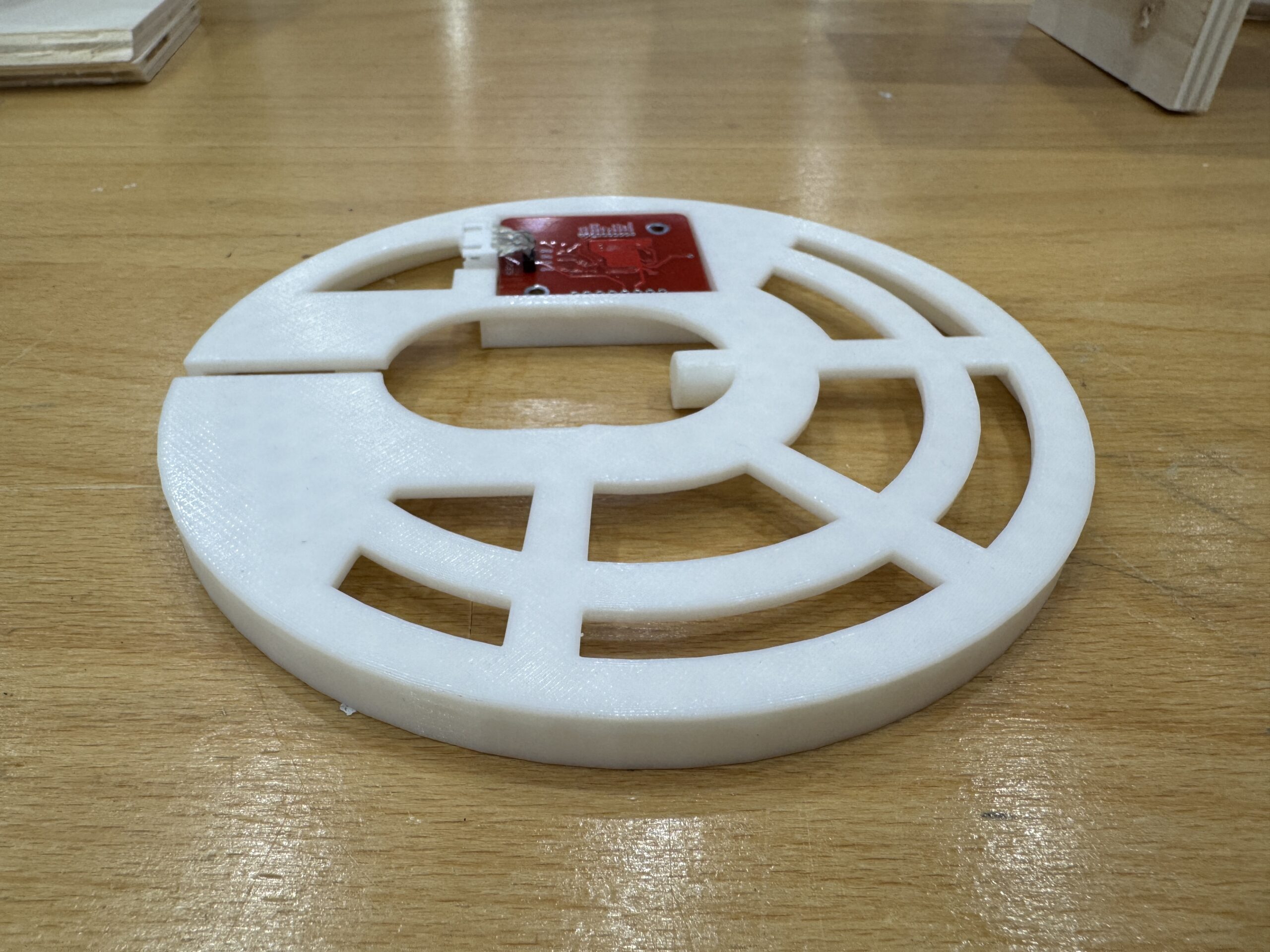
Each illustration is a replaceable paper print that can be changed over time. The print is placed on the wooden wheel base and protected by a removable plexiglass cover, allowing the paper to be easily replaced. The wheel can also be fully disassembled, making it easier to store and transport.
Casino-style feedback
LEDs light up on a correct or incorrect match, borrowing the pull of a casino wheel to keep the game persuasive in a way that stays honest rather than manipulative.
Built for repeated use
The axis was turned from POM, the rings CNC-cut from multiplex wood and plexiglass, and the layers held together with 3D-printed PLA clips.
Reflection
What's next
While testing the outer rings wobbled slightly when pressed from the side. The recommendation is a rotating platform bearing under the heaviest ring rather than fully fixed bearings, which would remove the ability to swap content at all. A card dispenser and a fully closed base would make the experience more finished.
What I learned
Leading the brainstorm session that got a fairly passive group from a blank page to this concept taught me to actively take charge within a team. It was also my first time working with students from a completely different study, Embedded System Engineering, and learning to adapt to each other’s working styles, then build on what we had in common, mattered just as much as any design decision.