Parkinson Aid
A bedside dispenser and wristband for a better night's rest
Pilly is a bedside medication dispenser paired with a wristband, designed for people with Parkinson’s whose sleep is disrupted by the timing of their medication. Instead of combining every requested feature into one device, the project scoped down to a single, well-tested need: a simple, reliable way to take medication in the middle of the night without fully waking up or disturbing a partner.
- 20 weeks, 2025
- Product design, prototyping & user testing
- SolidWorks, 3D printing, Lasercutting and Photoshop
The challenge
How can nighttime medication intake be simplified for a Parkinson's patient, with as little disruption to sleep as possible?
Early exploration started much broader: combining an alarm clock and a speech trainer into one device. Two quick prototypes later, the conclusion was clear: stacking every requested feature into one product made it feel unfocused, useful in parts but incoherent as a whole. Interviews pointed to a sharper problem underneath it all: people with Parkinson’s often wake up at night because their medication has worn off, and getting the next dose right, without fully waking a partner, was the part that actually mattered.
Research & understanding
Market research
Existing medication dispensers often offer either too little support or too many features, making them large and complex. A more focused solution could prioritise medication intake at night, with smartwatches as a practical way to send an alarm that is always on the user.
Medication
Medication routines vary between people with Parkinson’s, making flexible reminders and easy access important. Many patients wake up very early because their medication has stopped working, but it is still too early to take their first morning pill. This creates an opportunity to wake the patient up before the medication wears off, allowing them to take a midnight pill and get more sleep.
Patterns & sensors
Different sensors can track various physical symptoms related to Parkinson’s, but their usefulness varies between patients. This means medication patterns would need to be identified individually, based on which symptoms and sensor data are most relevant for each person. Which is out of scope for this project
These findings pointed to one direction: a compact, easily adjustable dispenser built around trustworthy reminders, not complex prediction.
Exploration & process
Sketching & concept mapping
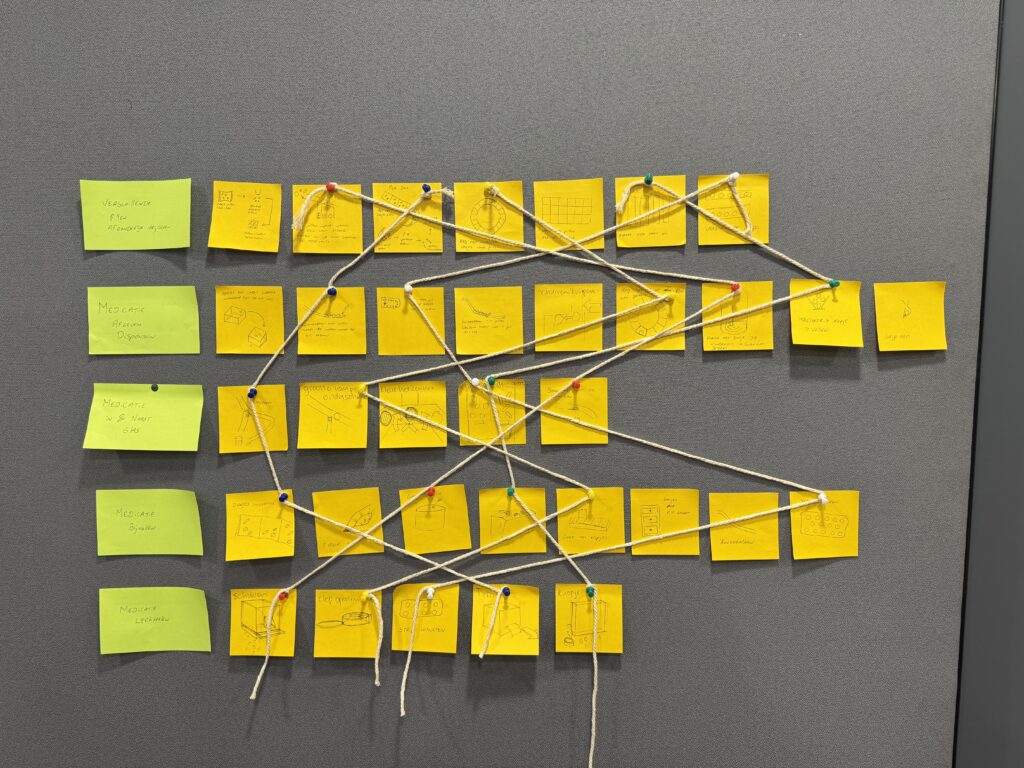
A morphological map generated combinations across pill release, dispensing, glass placement, refilling and emptying. A care organisation interview pointed to a design that works per pill type, since medication changes often and is sometimes handled with loose pots alongside pre-filled sachets.
Mechanism development
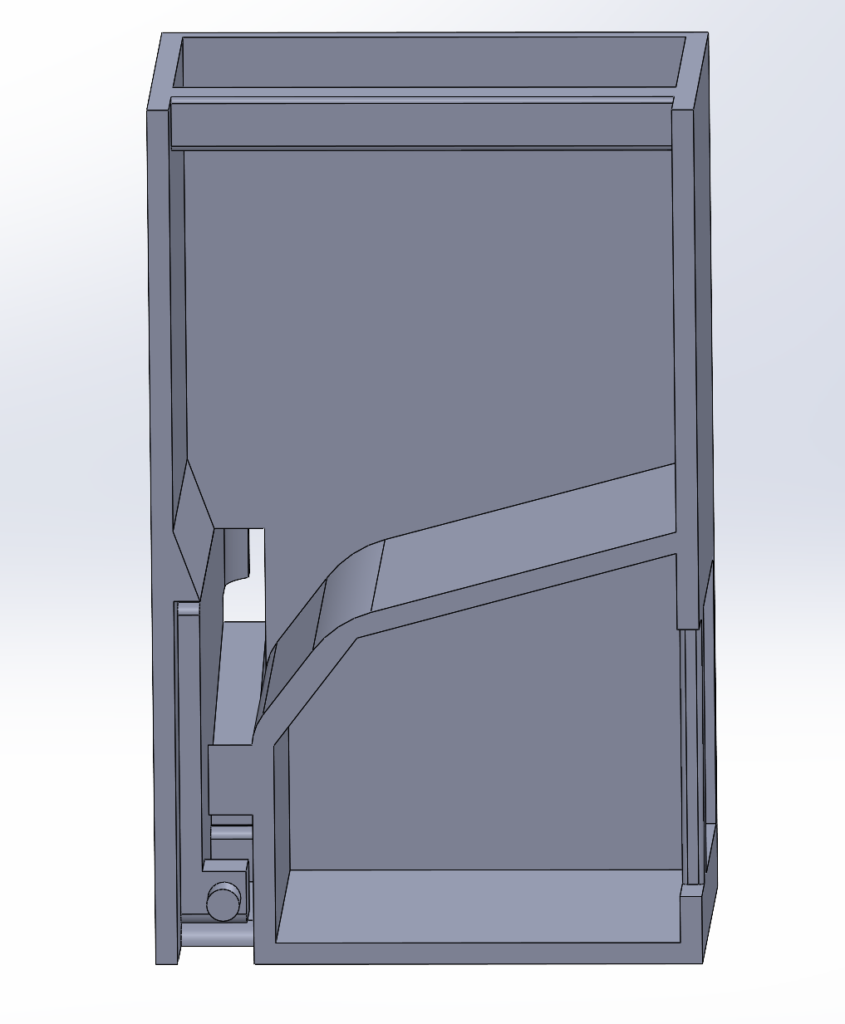
The pill-release mechanism was reverse-engineered from a sweetener dispenser: a spring-loaded slider, pushed by a servo motor, releases exactly one pill per squeeze. It was modelled in SolidWorks and 3D printed to test with real pill sizes.
Housing & pill-box iteration
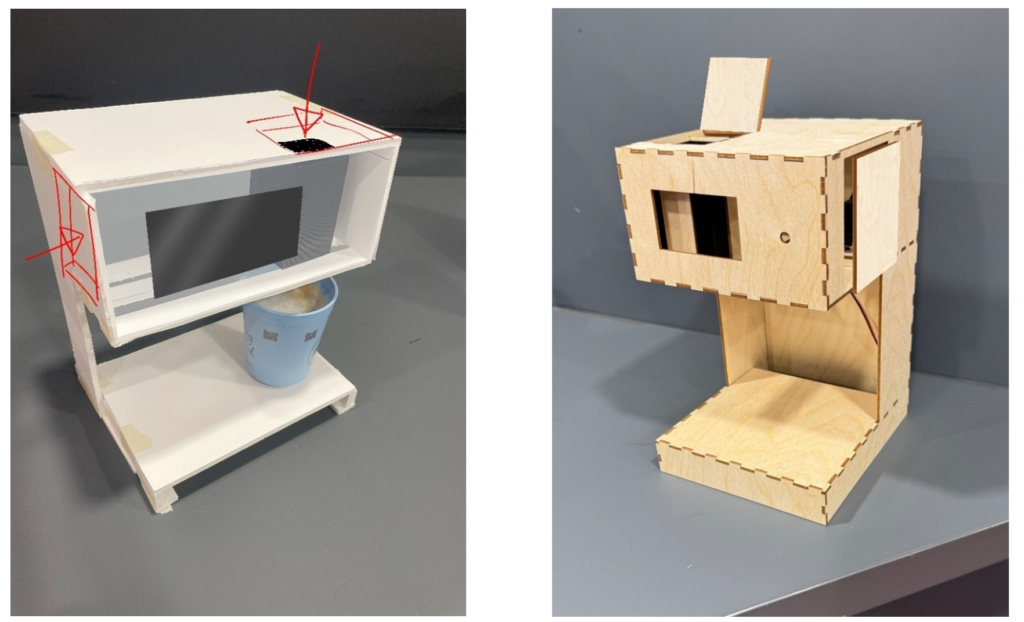
A functional housing was built around the pill boxes and a cup mock-up, first in foamboard and then in wood to save material and reduce footprint. Testing showed top-loading pill boxes worked better than side-loading, since the internal slider kept catching on the side rails.
Final design
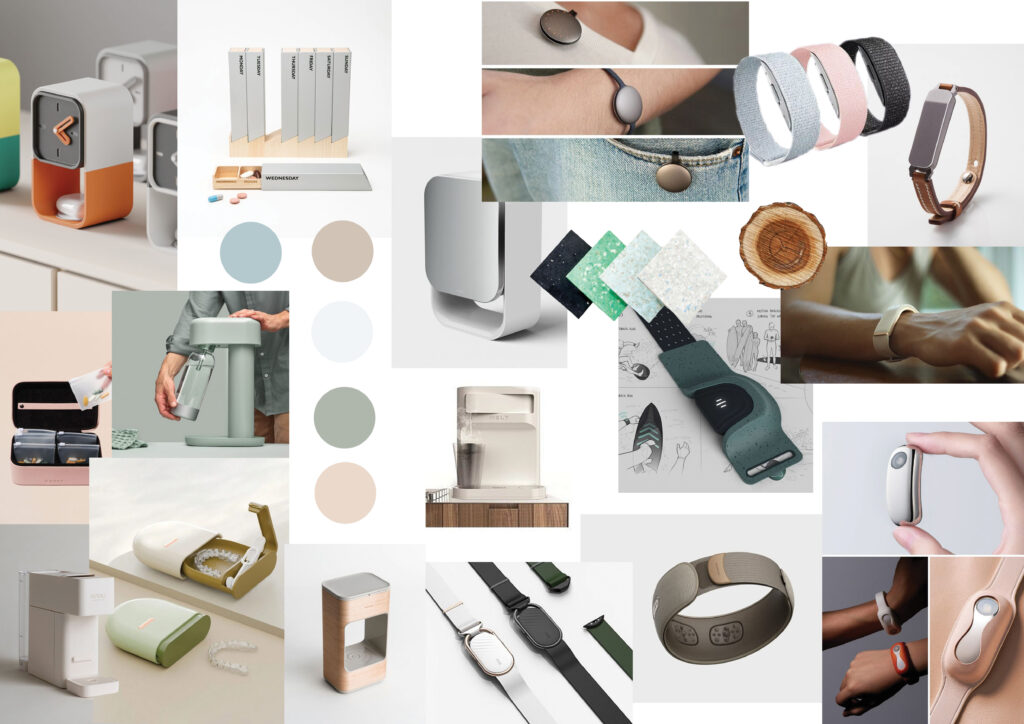
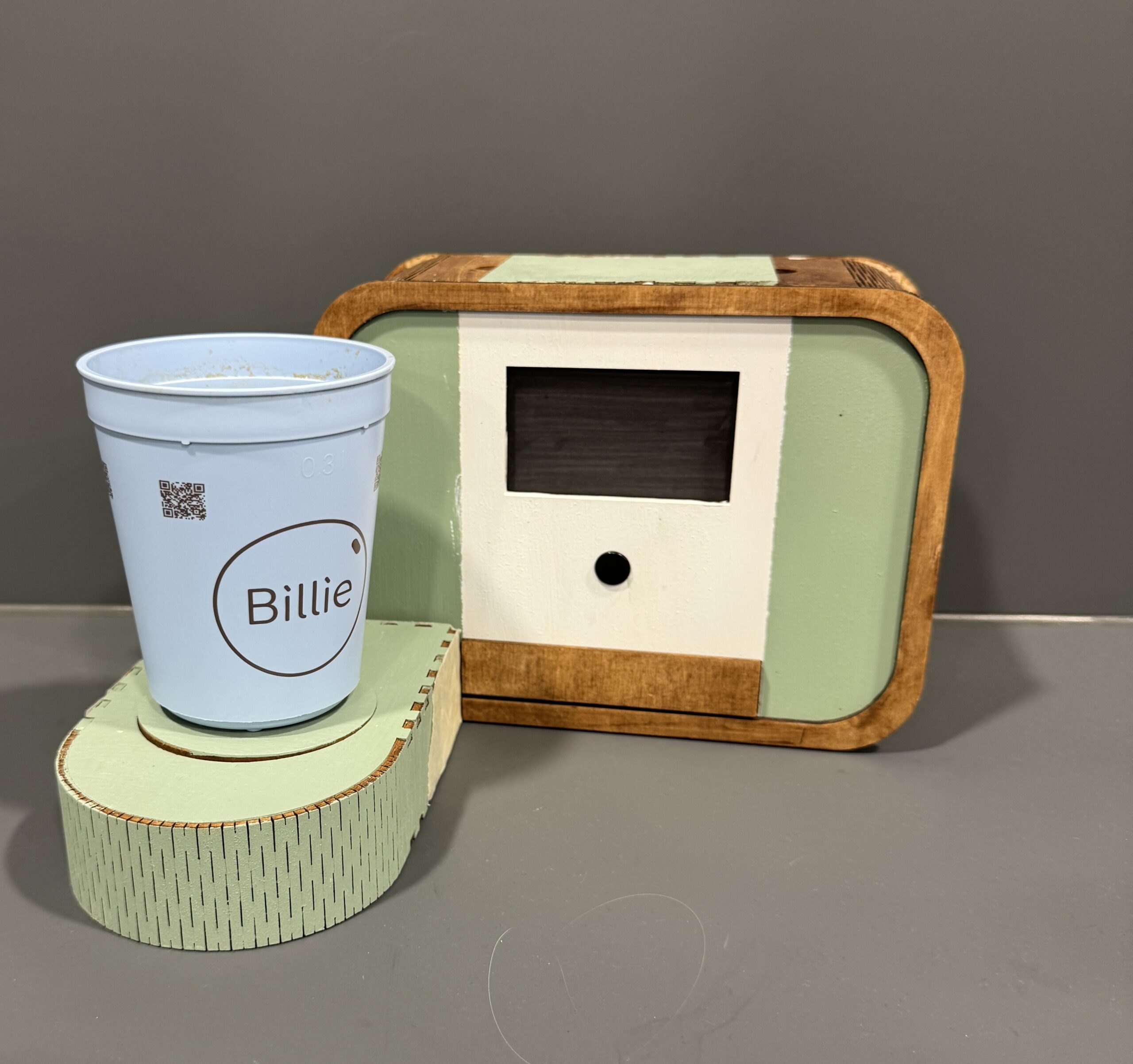
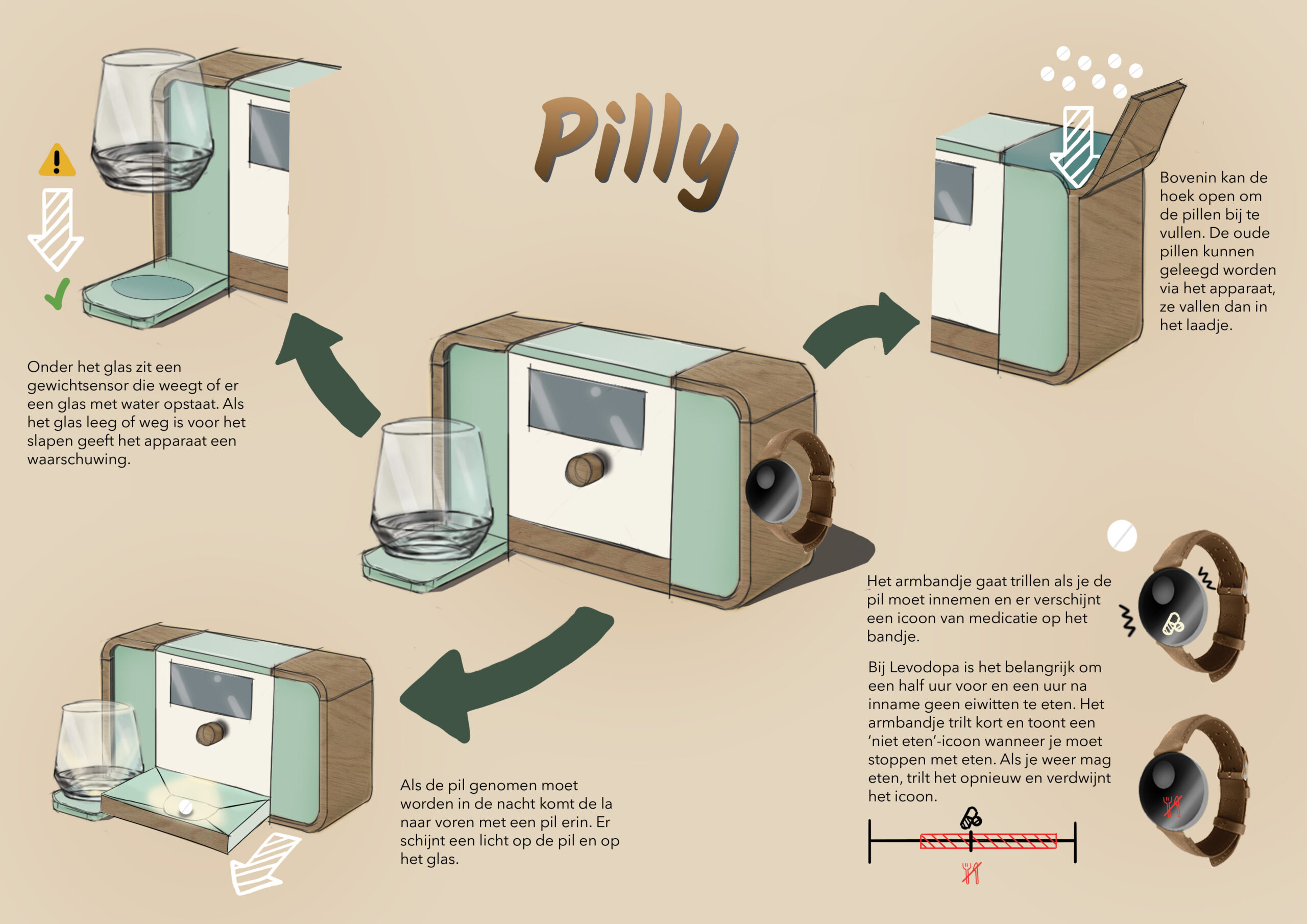
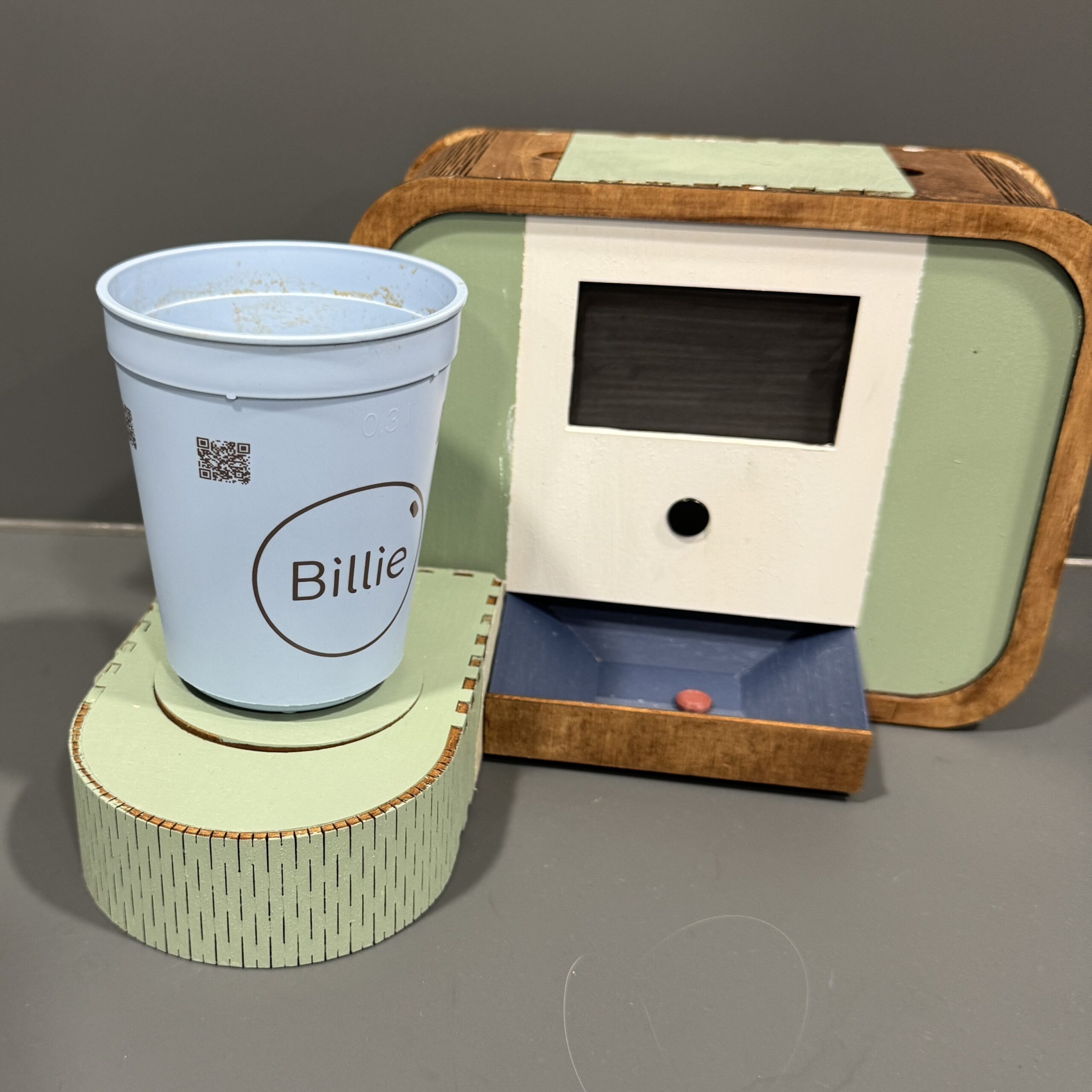
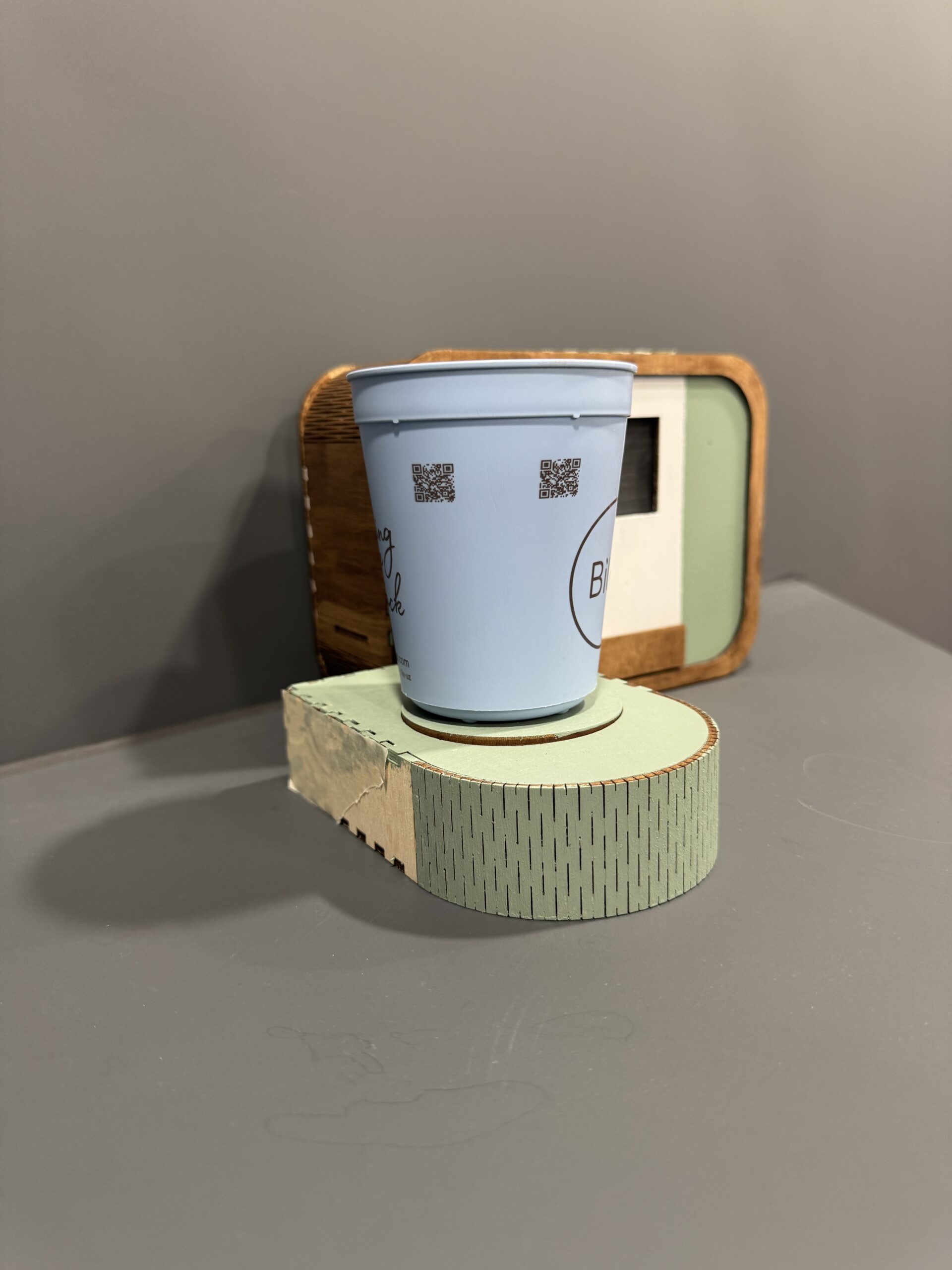
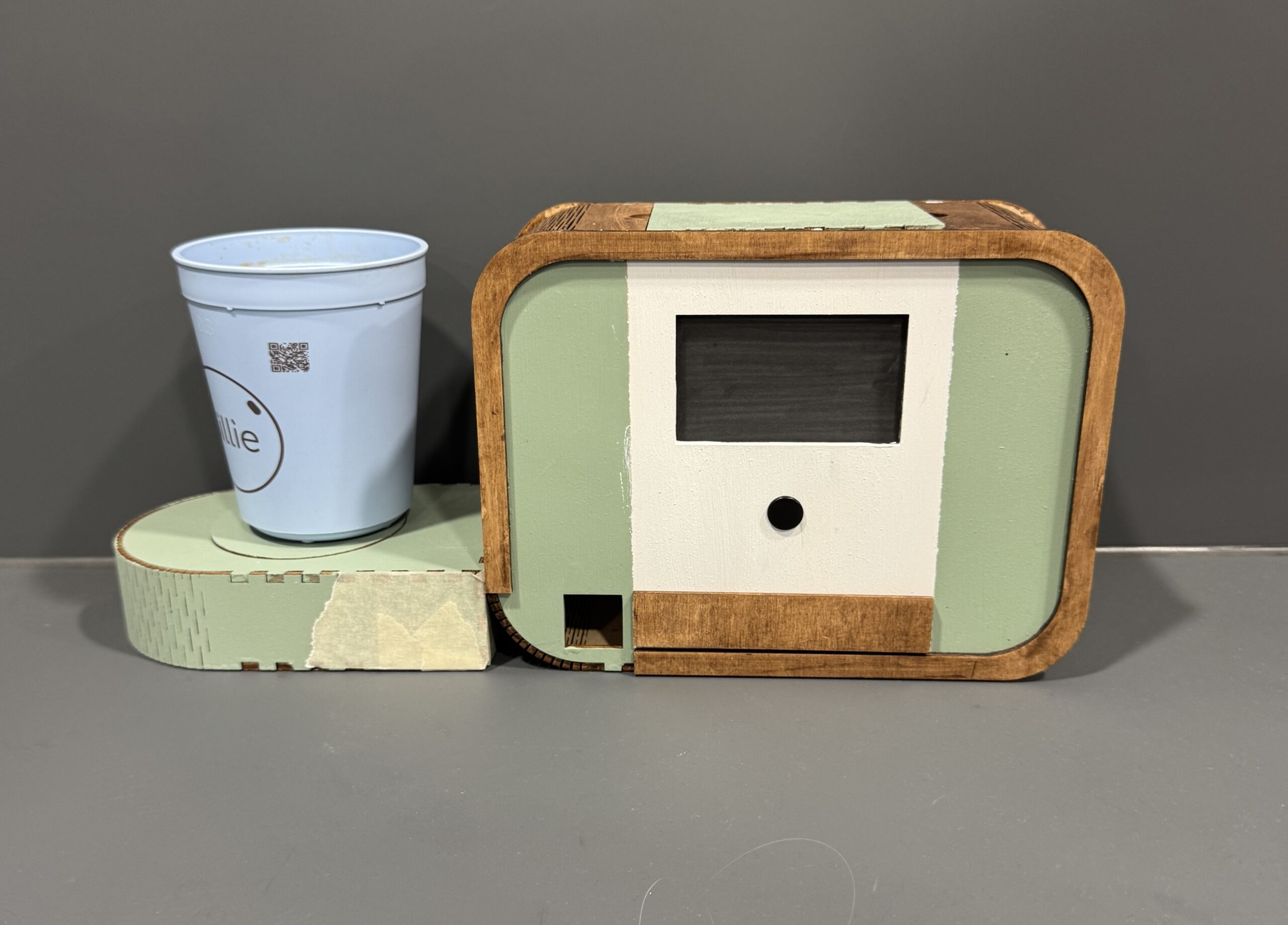
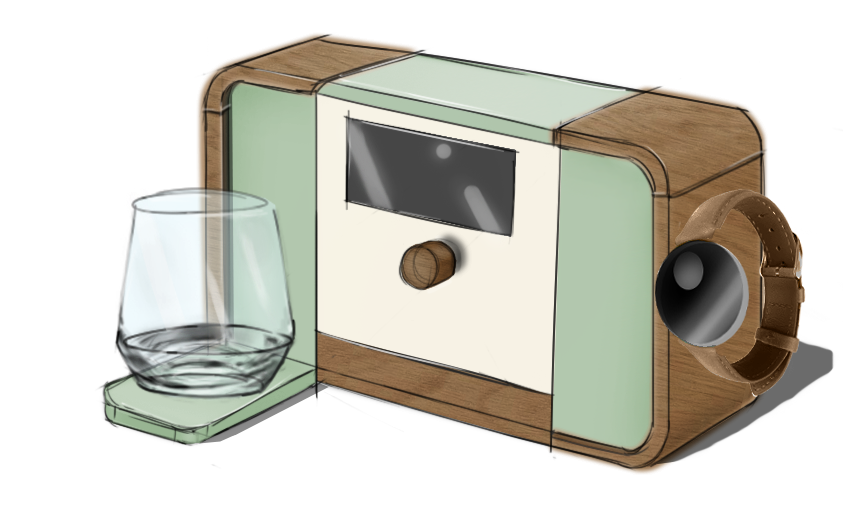
The final design measures 20 x 15 x 8.2cm, well within the original size limit, and pairs the bedside dispenser with its wristband. It was refined in Photoshop alongside a poster explaining how it works, moving away from the clinical look several interviewees flagged as off-putting, while keeping the gravity-fed chute and top-loading pill boxes from testing.
Key design decisions
Top-loading pill boxes
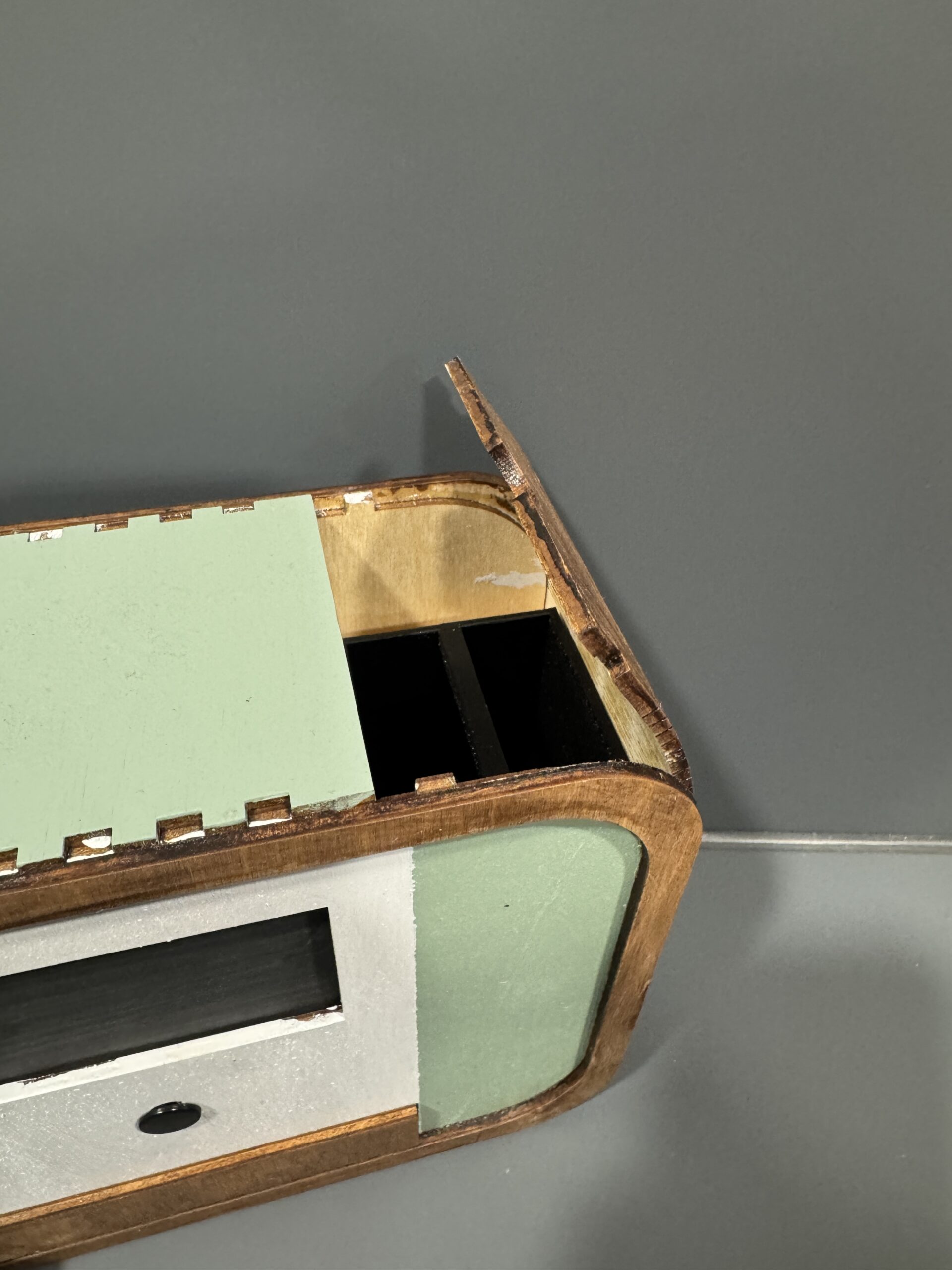
Boxes lift out from the top for refilling. Side-loading was tested first, but the internal slider kept catching on the guide rails, so top-loading became the final direction.
Haptic wristband
Vibration wakes the user without sound, so a partner isn’t disturbed. The bracelet style and icons were designed directly with future users in mind
Gravity-fed chute
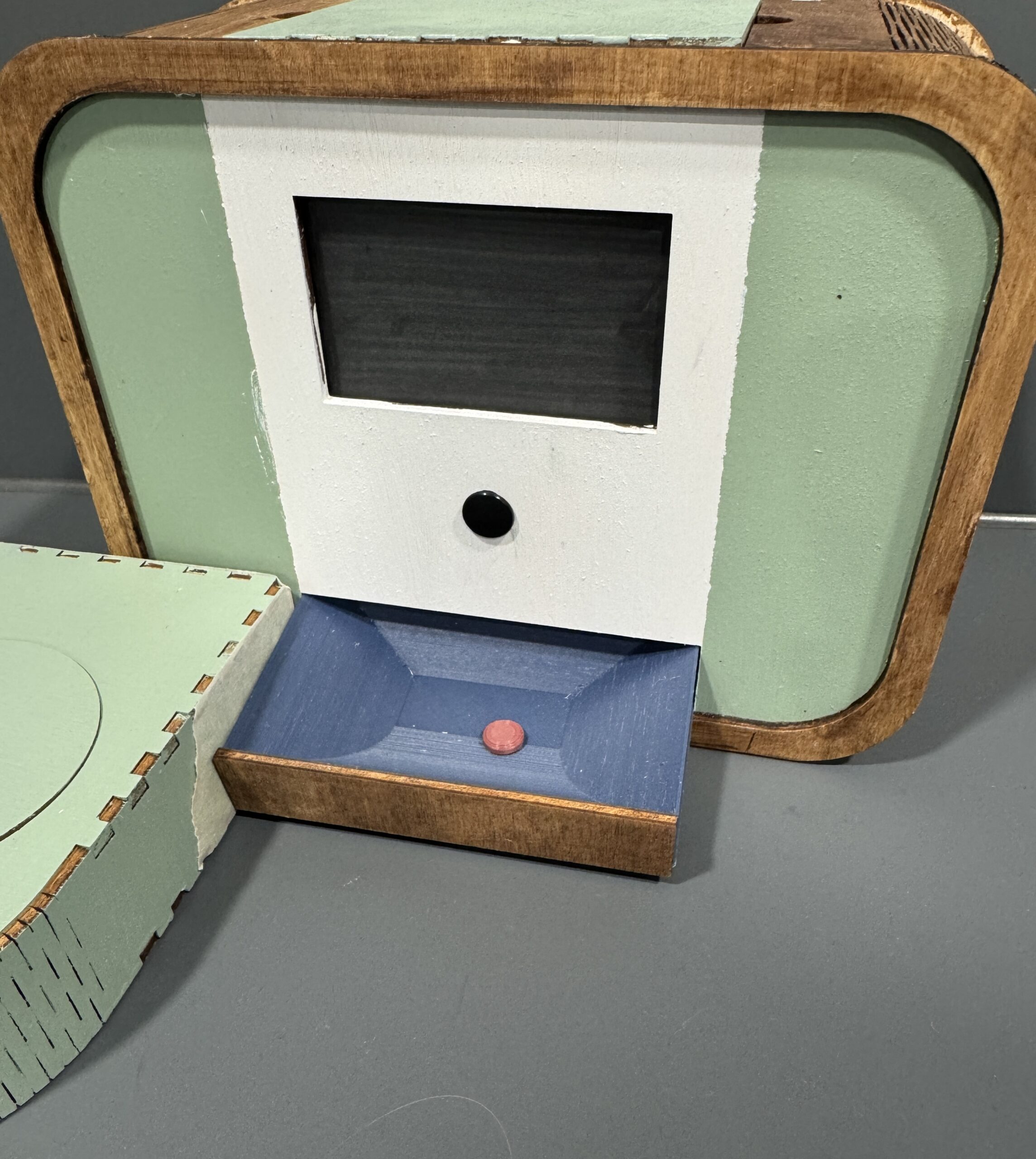
A 3d printed box with dispenser mechanism carry pills of different sizes down to the tray. The pills are dropt at the correct time with the help of servo motors. The collection drawer opens with the pil always in the middle due to a slanted design.
A requirement we dropped
Dissolving pills in water was an early requirement, but testing showed both dissolvable and standard pills leave granules that need stirring, an extra step nobody wants at 3am. The requirement was cut based on that result.
Reflection
What's next
Next steps include testing the wristband’s vibration with people who actually have Parkinson’s, since tremors could change how it’s felt or worn, and trying the dispenser with younger early adopters whose preferences for look and interaction may differ. The drawer size and a pill dispensing mechanism are also worth exploring further.
What I learned
This project taught me that medical products do not always have to look clinical or medical. A pill dispenser can be designed as a product that fits naturally into someone’s home and that they would not mind having visible. It also showed me the importance of designing for individual differences, as products should be adaptable to the different needs and responses of the people using them.